
Real-Time Vehicle Tracking for Dealership Logistics
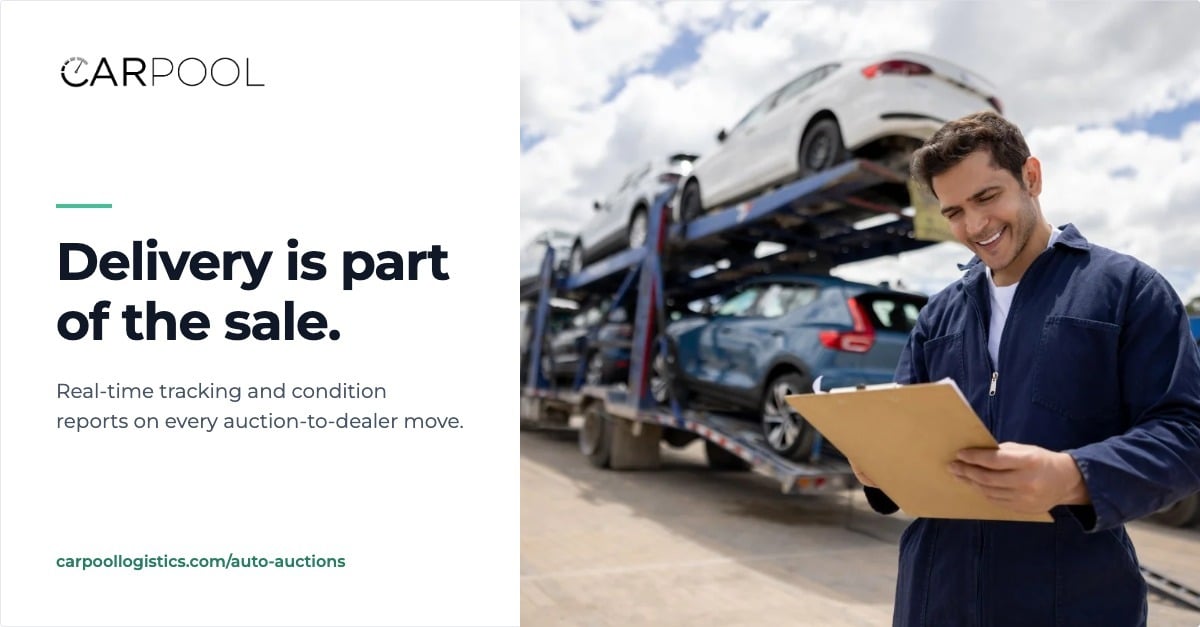
Vehicle logistics shipment visibility is the ability to see where each vehicle is, who is moving it, and what condition it is in at every point between pickup and delivery. For dealerships, that means VIN-level GPS positions, geo-tagged inspection photos, and proactive status updates in one place, instead of a dispatcher's phone number and a daily "where's my car?" call.
Most real-time visibility platforms are built for general freight: pallets, trailers, and lanes. Dealership logistics runs on individual VINs, each one a high-value unit with its own condition record, arbitration window, and frontline date. This guide covers what real-time tracking should look like for dealership logistics, which providers offer it, and how to evaluate the difference.
Key takeaways
- Real-time shipment visibility for dealerships means VIN-level GPS from a driver app, not checkpoint emails relayed by a carrier.
- Tracking is only as good as the carrier running it. A closed, vetted network with a required driver app produces consistent data; an open marketplace does not.
- Visibility should include condition evidence: geo-tagged, timestamped photos and an electronic bill of lading at both ends of the move.
- Carpool Logistics combines VIN-level tracking, verified carriers, and proactive updates in one managed platform, with 98% of loads carrying in-transit tracking points.
- General freight visibility platforms do not fit dealership vehicle logistics because they track trailers and shipments, not individual vehicles.
What is vehicle logistics shipment visibility?
Shipment visibility in vehicle logistics is continuous, VIN-level knowledge of a vehicle's location, status, and condition from the moment a carrier is assigned until the keys are handed over at the destination. It has three parts:
- Location: Live GPS position of the vehicle in transit, captured from the driver's app rather than reported by phone.
- Status: Milestone updates (dispatched, picked up, in transit, delivered) that advance automatically as the truck crosses geofences around the origin and destination, with alerts when a shipment deviates from its expected timeline.
- Condition: Geo-tagged, timestamped inspection photos and an electronic bill of lading at pickup and delivery, stored against the VIN.
A provider that offers only one of the three is giving you a tracking number. A provider that offers all three is giving you a chain of custody.
Which vehicle logistics providers offer real-time shipment visibility for dealerships?
Real-time visibility for dealership vehicle shipping comes from three kinds of providers, and the depth of tracking depends on the model.
Managed transport platforms own the carrier relationship and require their carriers to run a driver app, so tracking is a platform standard rather than a carrier option. Carpool Logistics is built on this model: a closed, continuously monitored network of 13K–14K+ vetted carriers, live GPS from the Carpool driver app on 98% of loads, geo-tagged condition photos on every move, and a managed operations team that handles exceptions.
Shipping management software such as Super Dispatch provides GPS tracking and electronic bills of lading when the assigned carrier uses the platform's app. The dealership or broker still sources and manages the carrier, so visibility depends on which carriers you work with.
Self-managed marketplaces such as Central Dispatch connect dealers with carriers directly. Tracking and documentation are left to the individual carrier, which means visibility varies load to load.
The question to ask any provider is not "do you offer tracking?" but "what percentage of your loads carry in-transit GPS points, and what happens on the ones that don't?"
Why general freight visibility platforms don't fit dealership logistics
Search for "real-time shipment visibility" and the results are dominated by freight visibility platforms designed for truckload, LTL, and container shipping. They track trailers, containers, and shipments by PRO or reference number. They are built for shippers moving pallets through a distribution network.
Dealership vehicle logistics is different in four ways:
- The unit is the VIN. A nine-car hauler carries nine separate shipments with nine condition records, nine delivery addresses, and potentially nine different buyers. Trailer-level tracking tells you where the truck is, not whether your unit is on it.
- Condition is part of visibility. A scuffed bumper discovered at delivery is a claim, a reconditioning delay, and a frontline date pushed back. Freight visibility platforms do not capture per-unit condition photos at handoff.
- The clock is an arbitration window. Auction-sourced inventory has a return window that starts at purchase. Dispatch speed and delivery timing are not just service metrics; they determine whether you can still send a problem vehicle back.
- The handoff is the risk. Vehicle release at the lot or auction gate is where fraudulent pickups happen. Visibility that starts when the truck is already moving misses the moment that matters most.
A vehicle-specific platform treats each VIN as its own shipment, captures condition at both ends, and documents the release itself.
What should real-time vehicle tracking include for a dealership?
When evaluating vehicle logistics providers on shipment visibility, look for these specifics:
- VIN-level GPS from a driver app. Ask what share of loads carry in-transit tracking points. Carpool Logistics tracks 98% of loads with in-transit data from the driver app.
- Geofence-driven status updates. Status should advance automatically when the truck arrives at the pickup or delivery location, not when a driver remembers to call.
- Proactive exception alerts. A late pickup or a shipment running behind its expected timeline should trigger an alert to you and to the provider's operations team, who own resolution.
- Geo-tagged, timestamped condition photos. Captured at pickup and delivery in the driver app, attached to the electronic bill of lading, and stored against the VIN.
- Customer-facing tracking. For home deliveries, a live tracking link your customer can follow, so your sales team is not relaying updates by hand.
- Visibility where you work. A portal is the minimum. A browser extension that shows live status next to the VIN, and an API that pushes events into your DMS or inventory system, keep your team out of a separate tab.
- Documented release. Identity verification at the point of pickup, so the chain of custody starts at the gate rather than on the highway.
How does real-time tracking change dealership logistics operations?
Visibility changes three numbers that dealership logistics leaders already watch.
Staff hours per vehicle. Without tracking, someone on your team is calling carriers, emailing brokers, and answering salespeople who want to know when the car lands. With VIN-level GPS and automatic status updates, those calls stop. The provider's operations team handles exceptions, and your team checks a screen.
Lot days. When you can see a vehicle's live position and expected delivery window, you can schedule reconditioning, build the listing, and line up the buyer before the truck arrives. Carpool Logistics delivers 99.75% of shipments within 7 days of pickup and dispatches with a 21-hour median from order to carrier assignment, which makes the frontline date something you plan around rather than wait for.
Claims. Condition photos at both ends of the move turn a post-delivery dispute into a comparison of two timestamped records. Carpool Logistics finished 2025 at 99.8% claim-free across its shipments, a product of carrier vetting, documented handoffs, and continuous performance monitoring.
Comparison: levels of shipment visibility in vehicle logistics
| Visibility level | What you see | Who provides it | What it costs you |
|---|---|---|---|
| Phone and email updates | Status when you ask for it | Traditional brokers, open marketplaces | Staff hours chasing updates; surprises at delivery |
| Checkpoint tracking | Picked up, delivered; sometimes in-transit pings | Shipping software, carrier-dependent | Gaps between milestones; condition unverified |
| VIN-level real-time visibility | Live GPS, geofence milestones, condition photos, eBOL, exception alerts | Managed vehicle logistics platforms (Carpool Logistics) | Visibility is included in the managed service |
How Carpool Logistics delivers real-time vehicle tracking for dealerships
Carpool Logistics runs dealership vehicle shipping as a managed service on a vehicle-specific platform. Every shipment is tracked at the VIN level from order to delivery.
Carriers in the Carpool network are vetted before onboarding, monitored continuously for DOT authority, insurance, and safety ratings, and re-verified at each load assignment. Drivers run the Carpool app, which feeds live GPS to the platform and captures geo-tagged, timestamped inspection photos at pickup and delivery. Geofences around each origin and destination advance the shipment status automatically and trigger alerts when a vehicle deviates from its expected timeline. Exceptions go to Carpool's operations team, not back to your staff.
Your team sees all of it through the customer portal, the Carpool browser extension, which shows live status and instant quotes next to any VIN on any webpage, or the Open API and webhooks, which push order and vehicle events into your DMS or inventory system. For home deliveries, your customer gets a live tracking link.
Visibility starts at the gate. Carpass, Carpool's patent-pending secure release system, is the latest layer on top of carrier vetting, live GPS, and inspection photos: the driver's live selfie is matched inside the pickup geofence to the ID verified at registration before a time-limited release code is issued. It is rolling out across the Carpool network now, included at no additional cost.
The operating data: 98% of loads with in-transit tracking points, 99.75% delivered within 7 days of pickup, a 21-hour median order-to-dispatch, and 99.8% claim-free in 2025 across 210,000+ vehicles delivered per year.
FAQs about real-time vehicle tracking for dealership logistics
What is real-time shipment tracking in vehicle logistics?
Real-time shipment tracking is live GPS location data for each vehicle in transit, captured from the carrier's driver app and displayed against the VIN, combined with automatic status updates as the vehicle reaches pickup and delivery geofences. Carpool Logistics captures in-transit tracking points on 98% of loads.
Which vehicle logistics providers offer real-time shipment visibility for dealerships?
Managed vehicle logistics platforms such as Carpool Logistics provide VIN-level GPS tracking, condition photos, and proactive alerts as a platform standard. Shipping management software provides GPS tracking when the assigned carrier runs its app. Self-managed marketplaces leave tracking to the individual carrier.
How is vehicle tracking different from general freight visibility?
General freight visibility tracks trailers and shipments by reference number. Vehicle logistics visibility tracks each VIN individually, including its condition at pickup and delivery, because every vehicle on a hauler is its own shipment with its own buyer, claim exposure, and frontline date.
Does real-time tracking reduce damage claims?
Tracking alone does not prevent damage, but geo-tagged, timestamped condition photos at both ends of the move resolve disputes with evidence rather than memory. Carpool Logistics pairs that documentation with carrier vetting and continuous performance monitoring, and finished 2025 at 99.8% claim-free.
Can my customers track a home delivery?
Yes. Carpool Logistics sends home-delivery customers a live tracking link so they can follow the vehicle without calling your dealership.
How does Carpool Logistics integrate tracking with dealership systems?
Through the customer portal, a browser extension that shows live status next to any VIN on any webpage, and an Open API with webhooks that push order and vehicle events into your DMS, CRM, or inventory tools.